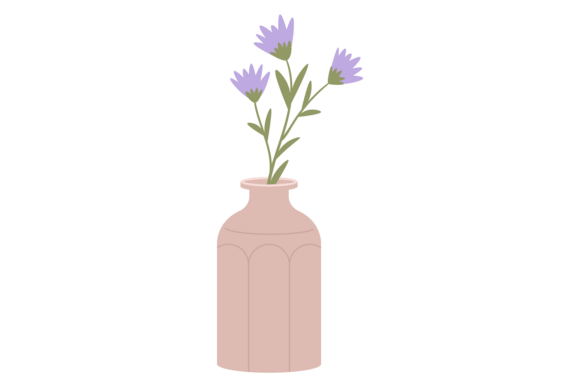
Wild Flowers in Ceramic Vase. Decorative
A Soft, Cheerful Anchor for Handmade Charm
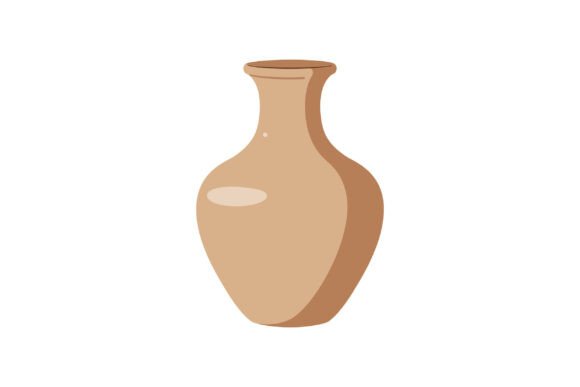
First glance at Wild Flowers in Ceramic Vase. Decorative feels like opening a sunlit kitchen window—gentle, unhurried, quietly joyful. It’s not bold or graphic; it’s a tender illustration of loose, unstructured blooms tucked into a simple ceramic vessel. The composition breathes: no tight symmetry, no aggressive contrast—just soft curves, organic spacing, and that subtle hand-drawn warmth you’d expect from a well-loved botanical sketchbook. As an embroidery designer who’s stitched hundreds of floral motifs, I immediately sensed its potential as a handmade product centerpiece—not for high-impact branding, but for pieces where sincerity matters more than shoutiness.
Where It Truly Shines: Real Projects, Real Reactions
Last week, I prepped Wild Flowers in Ceramic Vase. Decorative for a custom embroidered tote bag destined for a local herbalist’s pop-up stall. Not a logo, not a slogan—just this design, centered on natural linen canvas. The result? Customers paused. Smiled. Asked, “Is that hand-drawn?” That’s the quiet power of this piece: it reads as intentional, human, and thoughtful—not templated. It works beautifully on sweatshirt embroidery (especially oatmeal or heather grey), pillow covers for nursery or living room, and tea towels where softness and domestic warmth are the whole point. I also tested it as a personalized gift on a baby onesie—scaled down to 3.2" wide—and the vase shape held up cleanly, with petals retaining gentle definition even at that size.
What to Watch For: Texture, Scale, and Fabric Truths
This isn’t a “throw-it-on-anything” design. Its charm lives in restraint—and that means some real-world embroidery conditions require extra attention. On stretchy fabric like cotton jersey or ribbed knit, the delicate curves of the vase rim and thinner stems need solid cutaway stabilizer to prevent wobble. On textured fabrics like burlap or heavy terry cloth, fine petal outlines can blur—so I recommend simplifying fill stitch density or opting for a satin-stitch outline + minimal fill if clarity is critical. And while the design reads well on dark fabric, avoid stitching it in light pastels without testing thread contrast first: pale yellow on navy can vanish unless you boost stitch coverage slightly.
Small Hoop? Curved Surface? Proceed Thoughtfully
If you’re planning cap embroidery or patch work, check the original layout carefully. The vase base sits low and full—great for flat surfaces, but potentially awkward near the curve of a crown or the seam of a curved patch backing. For tiny lettering or monogram integration, leave generous breathing room: this design doesn’t lend itself to tight framing. Likewise, avoid cramming it into hoops under 4"x4" unless you’re willing to simplify stems or reduce petal layering—it’s a design that benefits from gentle negative space.
How It Shapes Perception—Beyond the Stitch
In my small shop, customers don’t just buy a flower—they buy the feeling behind it. Wild Flowers in Ceramic Vase. Decorative signals care, gentleness, and intentionality. When used on holiday embroidery (think Easter tea towels or Mother’s Day aprons), it feels celebratory without being cloying. On commercial embroidery for boutique branding, it adds warmth without sacrificing polish. Most importantly, it supports customer trust: because it looks handmade—not mass-produced—it reassures buyers they’re getting something considered, not copied. That perception lifts perceived value, especially for Etsy sellers and craft fair products where authenticity is currency.
Practical Designer Notes Before You Stitch
- Always test on scrap fabric—especially if using textured or dark materials. See how the vase base anchors and whether petal edges read clearly.
- Review stitch density before finalizing. Some versions may overfill the ceramic base; a lighter fill keeps it airy and avoids stiffness.
- Check thread colors in both natural and artificial light—soft pinks and sage greens shift dramatically under different bulbs.
- Confirm your hoop size matches the design’s natural proportions. Don’t force it into too tight a frame.
- Inspect corners and thin stems in your embroidery software—make sure no detail vanishes at low resolution.
- Test a black and white mockup. If the silhouette holds up without color, you’ve got strong design bones.
- Compare how it lands on light vs. dark backgrounds—this helps choose backing fabric or packaging visuals.
- Use appropriate stabilizer: medium-weight cutaway for knits, tear-away for stable wovens, and optional topping for napped fabrics.
- Verify licensing terms before selling finished items or bundling as digital embroidery file assets—Wild Flowers in Ceramic Vase. Decorative falls under Illustrations, not clip art, so commercial use rights matter.
Final Thought: A Design That Listens
Wild Flowers in Ceramic Vase. Decorative doesn’t demand attention—it invites it. That makes it rare among Graphics meant for embroidery: it serves the product, not the ego. Whether you’re a creative entrepreneur building a cohesive line of nursery goods, a hobbyist stitching heartfelt gifts, or a small shop owner curating tactile, memorable merchandise, this design earns its place by staying quietly essential. It won’t shout from a crowded Etsy listing—but it will make someone pause, smile, and say, “Yes. That’s exactly how I want my home—or my gift—to feel.” And in handmade work, that’s the highest compliment of all.